
Introduction
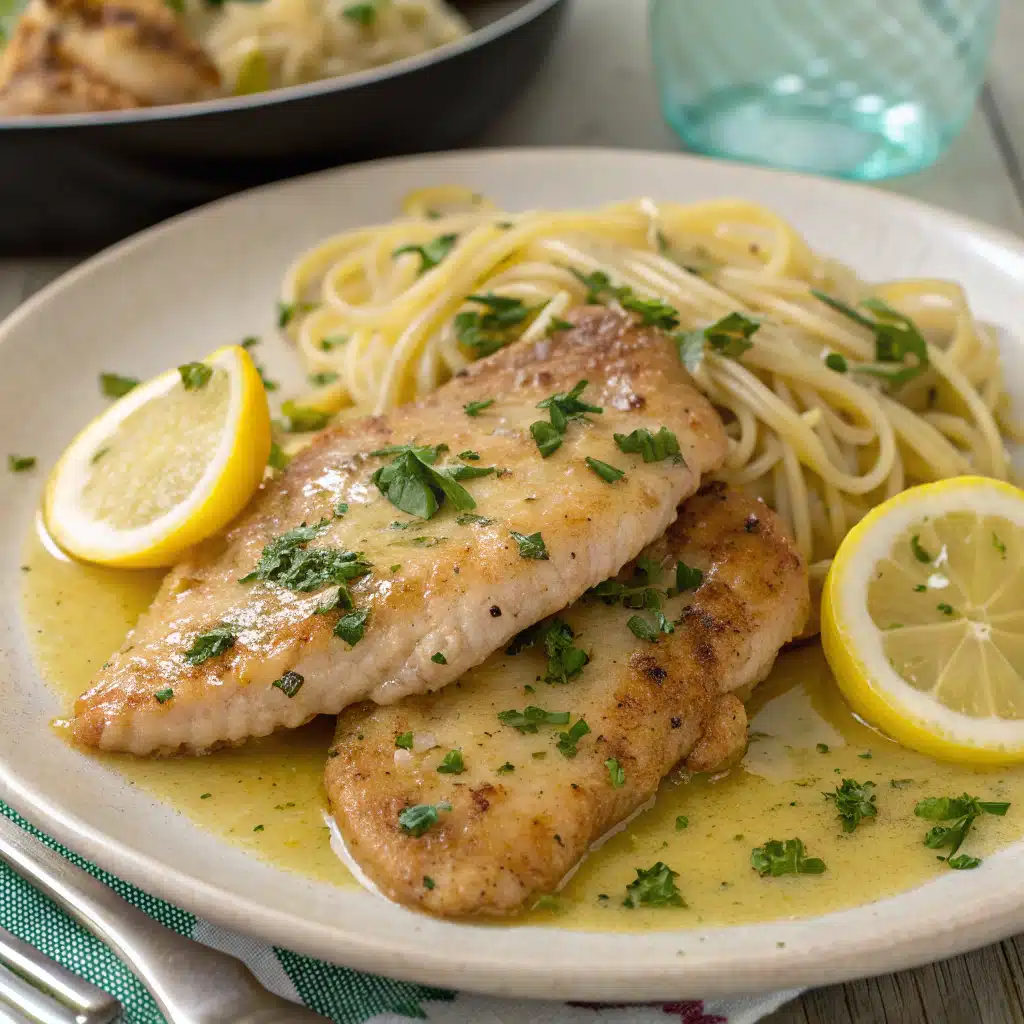
Chicken Piccata is a timeless classic of Italian-American cuisine, though its roots trace back to Italy, particularly the regions of Tuscany and Sicily. The word “piccata” itself means “larded” or “pounded flat,” referring to the preparation of the meat. This dish is the epitome of simple elegance: thinly sliced chicken cutlets, dredged in flour, sautéed until golden, and finished with a bright, tangy pan sauce made from fresh lemon juice, white wine (optional), butter, and briny capers. It is fast enough for a weeknight meal—requiring less than 30 minutes from start to finish—but impressive enough to anchor a sophisticated dinner party.
Ingredients
- 4 boneless, skinless chicken breasts (approx. 600g / 1.5 lbs), sliced horizontally into 8 thin cutlets
- 1/2 cup (60g) all-purpose flour, for dredging
- 1 teaspoon Kosher salt, plus more for seasoning
- 1/2 teaspoon black pepper
- 2 tablespoons olive oil
- 4 tablespoons (56g) unsalted butter, divided (2 tbsp for cooking, 2 tbsp for finishing the sauce)
- 1/2 cup (120ml) dry white wine (like Pinot Grigio) or extra chicken broth
- 1 cup (240ml) low-sodium chicken broth
- 1/4 cup (60ml) fresh lemon juice (from 1-2 lemons)
- 2 tablespoons capers, drained
- 1/4 cup fresh Italian parsley, chopped, for garnish
Step-by-step Preparation
- Prepare the Chicken: Place the chicken cutlets between two sheets of plastic wrap. Using a meat mallet, pound them gently until they are about 1/4-inch (0.6 cm) thick. In a shallow dish, combine the flour, salt, and pepper. Dredge each cutlet lightly, ensuring both sides are coated, then shake off the excess flour.
* *Tip:* Pounding the chicken ensures it cooks quickly and evenly, preventing dryness. - Sear the Cutlets: Heat the olive oil and 2 tablespoons of butter in a large skillet over medium-high heat. Once the butter foams, add four chicken cutlets (do not overcrowd the pan). Sear for 2 to 3 minutes per side until golden brown and cooked through. Remove the chicken to a plate and cover loosely with foil. Repeat with the remaining cutlets.
* *Tip:* If your pan is too crowded, the chicken will steam instead of sear, resulting in a pale finish. - Deglaze the Pan: Reduce the heat to medium. Pour the white wine (or extra broth) into the skillet, scraping up any browned bits (fond) from the bottom. Let the wine reduce by half (about 1 minute).
- Build the Sauce: Add the chicken broth, lemon juice, and drained capers to the pan. Bring the mixture to a gentle simmer and cook for 2–3 minutes until the sauce reduces slightly. Remove the skillet from the heat and whisk in the remaining 2 tablespoons of cold, cubed butter, one piece at a time. This process, called *monter au beurre*, thickens the sauce and makes it glossy.
* *Tip:* Ensure the pan is off the heat when adding the final butter to prevent the sauce from breaking or becoming oily. - Finish and Serve: Return the chicken cutlets to the pan and spoon the sauce over them to coat. Garnish generously with fresh chopped parsley. Serve immediately.
Nutritional Information
A single serving of Chicken Piccata (excluding sides like pasta) typically contains approximately 380–450 calories, 40-50g of lean protein, and 15-20g of fat (primarily from the butter and oil). This dish is an excellent source of lean protein. Due to the use of capers and broth, it can be high in sodium; consider using low-sodium broth to manage salt intake.
Storage
Store leftover Chicken Piccata in an airtight container in the refrigerator for 3 to 4 days. When reheating, it is best to use the stovetop. Place the chicken and sauce in a skillet over medium-low heat until warmed through. Avoid microwaving if possible, as high heat can dry out the thinly sliced chicken. Note that the sauce may separate slightly when cold, but should come back together when gently reheated.
Conclusion
Chicken Piccata is best served immediately, allowing the bright, buttery sauce to be fully appreciated. Classic accompaniments include angel hair pasta or linguine, which perfectly soak up the