
Introduction
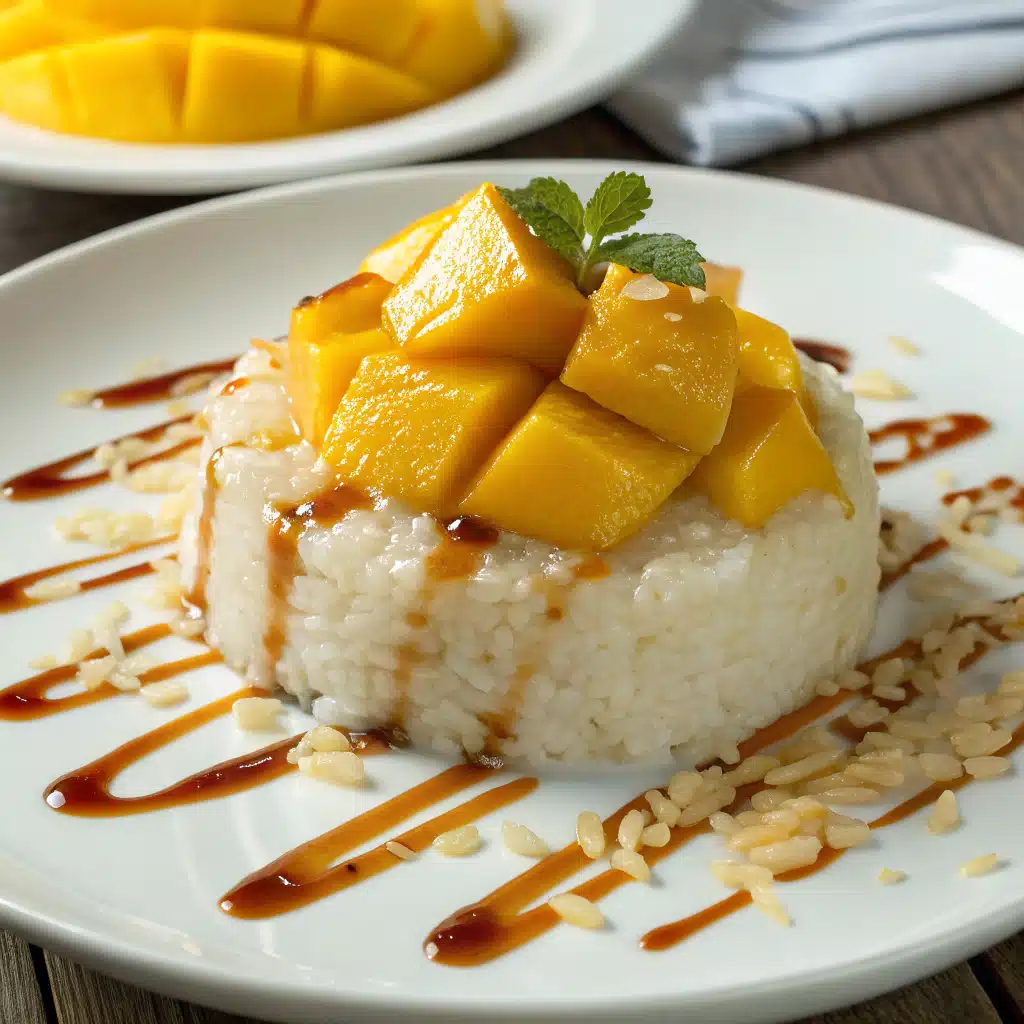
Mango Sticky Rice, or Khao Niao Mamuang, is arguably the most famous dessert to emerge from Thailand. This irresistible treat is a perfect symphony of textures and flavors: warm, creamy, salty-sweet sticky rice paired with cool, fresh, ripe mango slices. Although it is traditionally enjoyed during the peak mango season (typically April and May), this simple yet elegant dish is a year-round favorite that you can easily recreate at home, bringing a taste of Southeast Asia straight to your kitchen.
Ingredients
- 1 cup (200g) Sweet Sticky Rice (Glutinous Rice)
- 2 large, ripe Mangoes (preferably Thai varieties like Nam Dok Mai or Ataulfo)
- 1 cup (240 ml) Thick Coconut Cream (for the rice)
- 1/3 cup (65g) Granulated Sugar (for the rice)
- 1/2 teaspoon Fine Sea Salt (for the rice)
- 1/2 cup (120 ml) Coconut Milk (for the topping sauce)
- 1 tablespoon (15g) Granulated Sugar (for the topping sauce)
- Pinch of Salt (for the topping sauce)
- 1 tablespoon Toasted Sesame Seeds or Crispy Mung Beans (for garnish)
Step-by-step Preparation
-
Prepare the Sticky Rice: Rinse the glutinous rice thoroughly under cold running water until the water runs clear. This removes excess starch. Soak the rice in a bowl of fresh water for a minimum of 4 hours, or ideally, overnight.
Tip: Soaking ensures the rice cooks evenly and achieves the perfect sticky, chewy texture. -
Cook the Rice: Drain the soaked rice. The best method is steaming: place the rice in a cheesecloth-lined steamer basket over boiling water. Steam for 30–40 minutes, or until the grains are tender and translucent.
Tip: Do not boil glutinous rice like regular rice, as it will turn mushy. Steaming yields the best result. - Make the Coconut Cream Base: While the rice is steaming, heat the 1 cup (240 ml) of thick coconut cream, 1/3 cup (65g) sugar, and 1/2 teaspoon of salt in a small saucepan over medium-low heat. Stir constantly until the sugar is fully dissolved. Do not allow the mixture to boil. Remove from heat.
-
Combine Rice and Cream: Transfer the hot, steamed rice to a bowl. Immediately pour about 3/4 of the warm coconut cream mixture over the rice. Gently fold the cream into the rice until fully incorporated. Cover the bowl tightly and let the rice rest for 30 minutes. The rice will absorb the liquid and become glossy and creamy.
Tip: The rice must be hot when mixing; this allows it to soak up the maximum amount of flavor. - Prepare the Topping Sauce: In a separate small saucepan, combine the 1/2 cup (120 ml) coconut milk, 1 tablespoon sugar, and a pinch of salt. Bring to a very gentle simmer and stir until the sugar dissolves. This sauce should be slightly thinner than the base sauce. Keep warm.
- Assemble and Serve: Peel and slice the ripe mangoes. Scoop a generous portion of the warm sticky rice onto a plate. Arrange the mango slices next to the rice. Drizzle the topping sauce (from Step 5) liberally over the rice. Garnish with toasted sesame seeds or mung beans and serve immediately.
Nutritional Information
Mango Sticky Rice is a calorie-dense dessert due to its high content of coconut cream and sugar. A standard serving (approximately 1 cup of rice and 1/2 mango) typically contains 350–450 calories. While high in sugar and saturated fat, the dish provides a good source of dietary fiber and Vitamin C from the mango, which also contains antioxidants. Enjoy this treat in moderation.
Storage
Mango Sticky Rice is best enjoyed fresh. If you have leftovers, store the sticky rice and the mangoes separately. Place the rice in an airtight container in the refrigerator; it will keep for up to 2 days but will harden when chilled. The mangoes should be stored separately. To reheat the rice, steam it briefly or microwave it for 30–60 seconds until softened. Do not refrigerate the assembled dish, as the mangoes will spoil the rice texture.
Conclusion
This dessert offers the ultimate tropical comfort. While the classic pairing is simply mango and sticky rice, feel free to experiment with serving suggestions. Try using black glutinous rice for a nuttier flavor and dramatic purple color, or substitute the mango with other seasonal tropical fruits like durian or rambutan. The key to perfection lies in using high-quality, full-fat