
Introduction
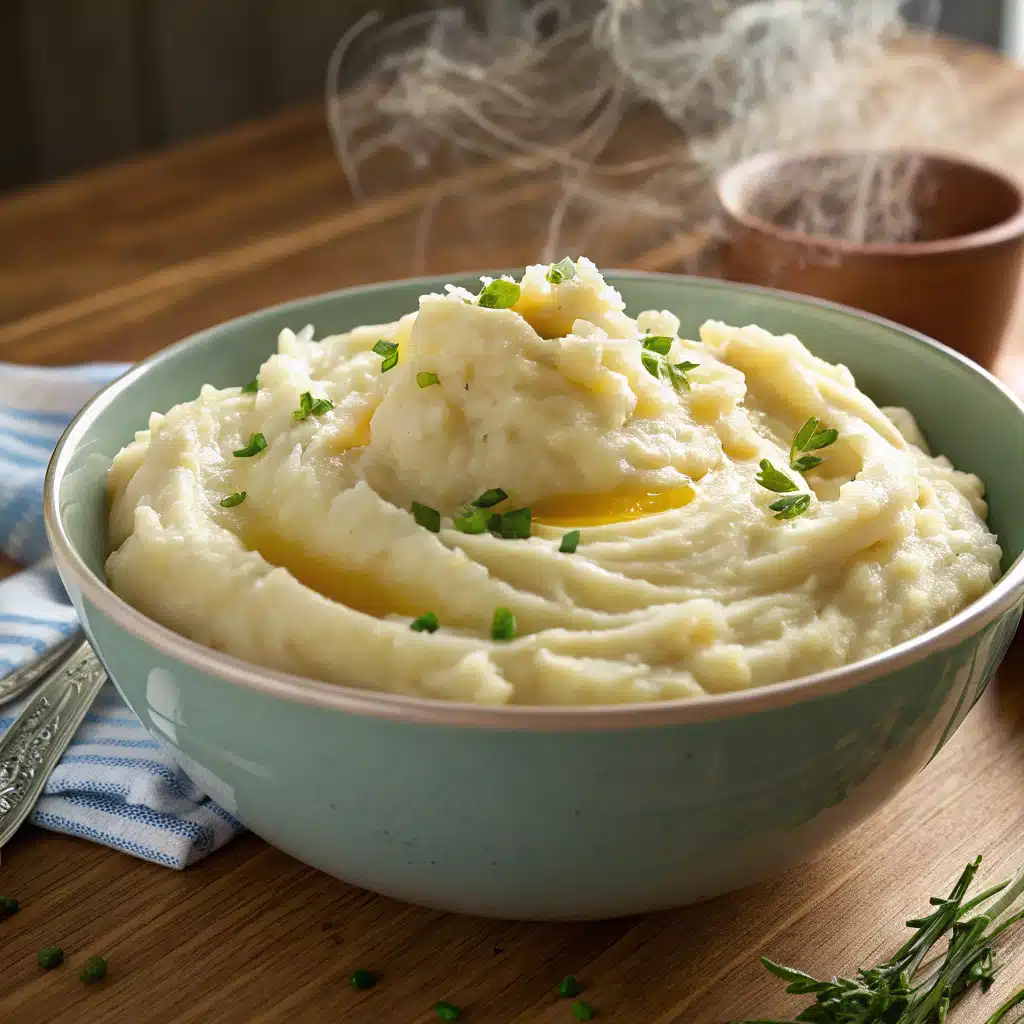
Mashed Potatoes are arguably the ultimate comfort food—a creamy, cloud-like accompaniment that elevates almost any meal. Simple in concept but requiring precision in execution, the perfect mash is smooth, fluffy, and richly flavorful. While the exact origins are debated, potatoes became a staple in European diets by the 17th century. The modern mashed potato recipe, as we know it, cemented its place in culinary history as the essential side dish—a blank canvas ready for butter, cream, and seasoning. This recipe focuses on achieving that luxurious, velvety texture that defines truly great mashed potatoes.
Ingredients
- Potatoes: 1 kg / 2.2 lbs Yukon Gold or Russet potatoes (peeled and cut into uniform 5 cm / 2-inch chunks)
- Unsalted Butter: 115 g / 1/2 cup (1 stick), cut into cubes
- Heavy Cream or Whole Milk: 120 ml / 1/2 cup
- Kosher Salt: 1 tablespoon (for boiling water), plus 1 teaspoon (for seasoning)
- Freshly Ground Black Pepper: To taste
Step-by-step Preparation
- Prepare the Potatoes (5 minutes): Peel the potatoes and cut them into roughly equal-sized chunks. Place the potatoes immediately into a large pot and cover them with cold water by about 5 cm (2 inches). Adding potatoes to cold water ensures they cook evenly from the outside in.
- Boil and Simmer (15–20 minutes): Add 1 tablespoon of Kosher salt to the water. Bring the water to a rapid boil over high heat, then reduce the heat to maintain a steady simmer. Cook until the potatoes are completely fork-tender and easily crumble when pierced.
- Drain and Dry (5 minutes): This is the most crucial step for fluffy mash. Drain the potatoes completely in a colander. Return the drained potatoes to the empty pot over low heat for about 5 minutes, stirring occasionally. This process allows excess moisture to evaporate, preventing gluey mash.
- Heat the Dairy (2 minutes): While the potatoes are drying, gently warm the heavy cream and butter in a small saucepan until the butter is melted and the mixture is hot (do not boil). Adding cold dairy cools the potatoes down too quickly and inhibits proper absorption.
- Mash and Incorporate (3 minutes): Using a potato ricer, food mill, or sturdy hand masher, process the hot potatoes until smooth. Slowly pour the warm butter and cream mixture into the potatoes while mashing. Mash only until the dairy is fully incorporated and the desired consistency is reached. Over-mashing releases starch, resulting in a sticky texture.
- Season and Serve: Taste the mixture and season generously with the remaining teaspoon of salt and fresh black pepper. Stir one last time gently. Serve immediately while hot.
Nutritional Information
A standard serving (approximately 200g) of traditional mashed potatoes made with butter and cream typically contains around 300–350 calories. They are an excellent source of Vitamin C, Vitamin B6, and are rich in potassium, which supports heart health. While the added fats increase the caloric density, potatoes themselves are naturally gluten-free and contain complex carbohydrates providing sustained energy.
Storage
Store leftover mashed potatoes in an airtight container in the refrigerator for up to 3–4 days. To reheat, transfer the mash to a saucepan and heat gently over low heat, stirring frequently. Add a splash of milk or cream to restore moisture and creaminess. Alternatively, reheat in the oven (covered) at 160°C (325°F) until warmed through. Mashed potatoes are not recommended for freezing, as the texture can become grainy and watery upon thawing.
Conclusion
The perfect Mashed Potato is a culinary achievement that brings joy to the table. They are the ideal partner for roast chicken, beef stew, or holiday turkey and gravy. For variations, consider infusing the cream with a clove of garlic before adding it, stirring in chives, or folding in a handful of grated Parmesan cheese at the end. Enjoy the comfort of this classic side dish!