
Introduction
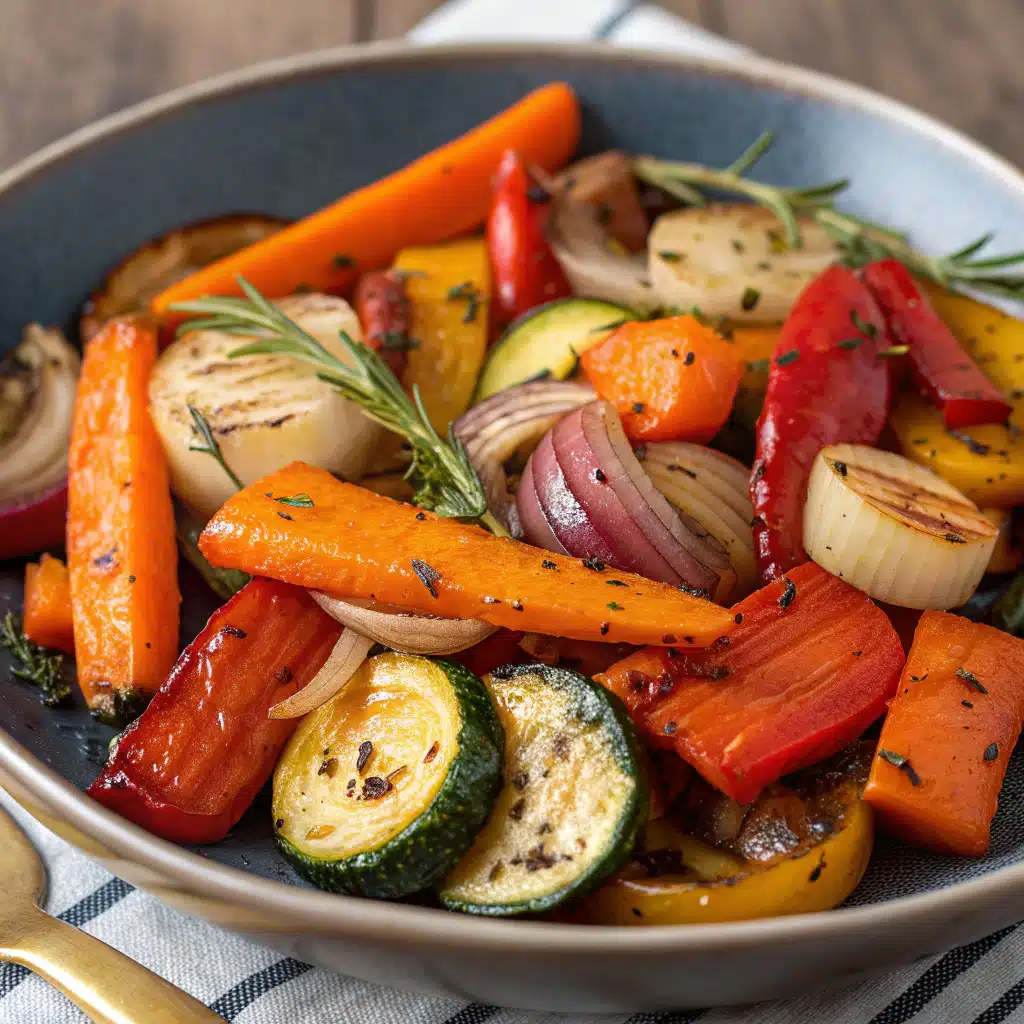
There is arguably no simpler or more satisfying method of cooking vegetables than roasting. This rustic technique, deeply rooted in culinary traditions worldwide, transforms humble produce by caramelizing the natural sugars, resulting in a deeply flavorful, tender interior and wonderfully crisp exterior. Roasted vegetables are not just a side dish; they are a versatile kitchen staple, requiring minimal effort but delivering maximum depth of flavor—perfect for weeknight dinners or elegant holiday spreads.
Ingredients
- 1 lb (500 g) Starchy Vegetables (e.g., Russet potatoes, sweet potatoes, or carrots), peeled and chopped
- 1 lb (500 g) Medium Vegetables (e.g., Brussels sprouts, broccoli florets, or thick-cut onion wedges)
- 4 Tbsp (60 ml) High-quality Olive Oil (or avocado oil)
- 1 tsp (5 g) Kosher Salt
- ½ tsp (2.5 g) Freshly Ground Black Pepper
- 1 Tbsp (15 g) Fresh Herbs (e.g., chopped rosemary, thyme, or oregano)
- Optional: 2 cloves Garlic, minced
Step-by-step Preparation
-
Preheat and Prepare: Preheat your oven to 400°F (200°C). Line a large, heavy-duty baking sheet with parchment paper or foil for easy cleanup.
Tip: Ensure the oven is fully heated before adding the vegetables. High heat is essential for achieving proper caramelization and crisp edges.
- Chop and Uniformity: Wash all vegetables thoroughly. The key to even roasting is cutting the vegetables into pieces of roughly the same size (about 1.5 inches / 4 cm). Dense vegetables (like potatoes and carrots) should be cut slightly smaller than softer vegetables (like broccoli).
-
Season Generously: Place all chopped vegetables into a large bowl. Drizzle with olive oil, ensuring everything is lightly coated. Sprinkle evenly with salt, pepper, and fresh herbs (and minced garlic, if using). Toss well until the seasoning is distributed.
Tip: Do not skimp on the oil or salt. The oil facilitates even heat transfer and crisping, while salt draws out moisture and enhances flavor.
- Roast in a Single Layer: Spread the seasoned vegetables onto the prepared baking sheet in a single layer. Crucially, do not overcrowd the pan; if the vegetables are touching too much, they will steam instead of roast. Use two pans if necessary.
- First Bake: Roast for 20 minutes. Remove the pan from the oven and use a spatula to flip or stir the vegetables, ensuring they brown evenly on all sides.
- Finish Roasting: Return the pan to the oven and continue roasting for another 15 to 20 minutes, or until the vegetables are fork-tender and deeply golden brown around the edges. Total roasting time is usually 35–45 minutes, depending on the vegetable density. Serve immediately.
Nutritional Information
A serving of roasted vegetables (based on four servings) typically contains approximately 150–200 calories, depending on the amount of oil used. This dish is naturally low in saturated fat and cholesterol, high in dietary fiber, and packed with essential micronutrients like Vitamin C, Vitamin K, and beta-carotene. The high fiber content aids digestion and promotes satiety, making this an excellent heart-healthy and weight-management friendly side dish.
Storage
To store leftovers, allow the roasted vegetables to cool completely before transferring them to an airtight container. They will keep well in the refrigerator for 3 to 4 days. For reheating, avoid the microwave, which can make them soggy. Instead, spread the vegetables on a baking sheet and reheat in a 350°F (175°C) oven or an air fryer for 5–10 minutes until warmed through and the crispness returns.
Conclusion
Roasted vegetables are truly the chameleon of the culinary world. While they shine as a simple side dish to grilled chicken or steak, they can also be transformed into a hearty main course when tossed with quinoa, rice, or pasta. For variations, try swapping out the herbs for spices like smoked paprika, cumin, or a touch of chili powder for an international flair. Mastering this basic technique opens the door to endless healthy and delicious meal possibilities.